


The 30-Day Marketing Planner for Busy Owners (No Fluff)
Marketing can feel like a full-time job — without the full-time results.
If you’re a business owner juggling sales, delivery, hiring, and cash flow, it’s easy for marketing to turn into a messy mix of “we should post more,” “let’s try ads,” and “someone said SEO matters.” You stay busy… but revenue doesn’t reliably move.
This is where a structured, ROI-focused marketing strategy makes the difference. Not a 40-page strategy deck. Not a complicated dashboard. Just a clear, repeatable monthly rhythm that creates direction, execution, and measurable learning.
At Hyperpath, a performance-based digital marketing agency UK businesses work with for clarity and accountability, this is the same 30-day structure we use to create measurable marketing growth without chaos.
Below is a no-fluff 30-day marketing planner built for busy owners.
Why Most Marketing Feels Busy (But Doesn’t Move Revenue)
Most “busy marketing” comes from three problems:
- No single monthly focus.
- You’re trying to do brand, lead generation, retention, partnerships, and content all at once. The result? Scattered effort and unclear ROI.
- Execution without a system.
- Tasks get done inconsistently. When things get hectic, marketing slips.
- Tracking that’s too complex — or nonexistent.
- Either you’re drowning in metrics or relying on gut feel. Neither produces measurable marketing growth.
A proper system — like the one used by a results-driven marketing agency — forces one clear decision each month: What are we trying to move, and what’s the smallest set of actions that can move it?
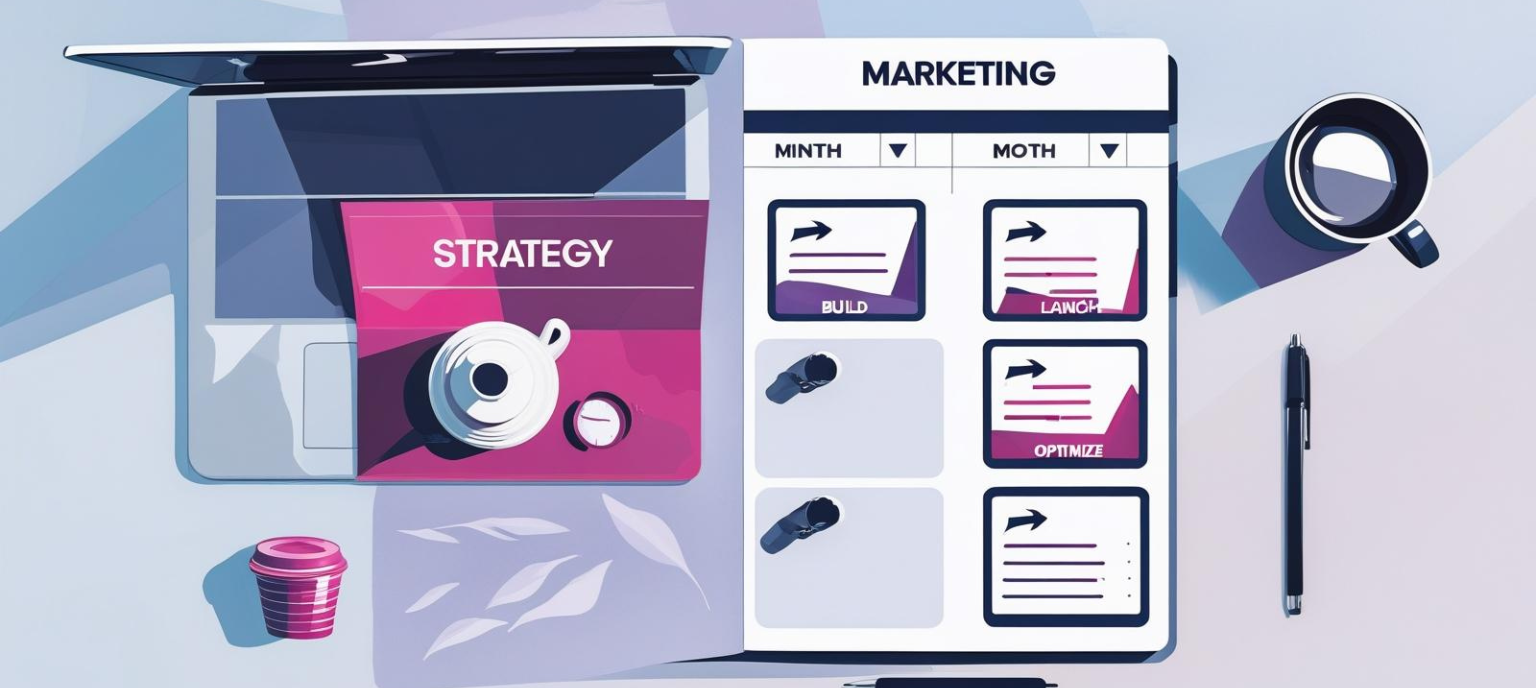
The 30-Day Marketing Planner: Four Weekly Blocks
Think of your month in four focused stages:
- Strategy
- Build
- Launch
- Optimize
This is how a performance marketing agency Manchester businesses trust structures growth — direction first, execution second, optimization always.
Week 1 — Strategy (Pick a Direction You Can Actually Execute)
Your goal isn’t brainstorming endlessly. It’s clarity.
Choose one objective:
- Generate more qualified leads
- Increase conversion rate
- Improve retention
- Increase average order value
Then define:
- One hero offer
- One clear audience slice
- 1–2 primary channels
- Simple KPI targets
This becomes your monthly operating system — a digital marketing strategy for SMEs that’s realistic, not overwhelming.
Week 2 — Build (Assets and Tracking That Remove Friction)
Now build only what’s essential.
You need:
- One focused landing or service page
- One clear conversion path
- Simple tracking setup
Keep the page clean and conversion-focused marketing driven:
- Clear problem
- Clear solution
- Proof
- Clear CTA
Tracking must support learning — not vanity metrics. This is where most owners realise why working with a performance-based digital marketing agency UK can save months of confusion: the difference is structured execution.
Week 3 — Launch (Ship, Don’t Perfect)
This is where momentum is built.
Pick 2–3 distribution channels:
- Paid ads (small validation budget)
- Partnerships
Avoid spreading too thin.
If running ads, keep it simple:
- One campaign objective
- One landing page
- 2–3 variations
- Controlled budget
The goal isn’t perfection. It’s data. That’s how a results-driven marketing agency builds predictable systems — launch, measure, refine.
Week 4 — Optimize (Small Improvements That Compound)
Optimization is relief.
You’re not rebuilding — you’re refining.
Focus on:
- Offer clarity
- Landing page conversion
- Traffic quality
- Follow-up speed
Simple improvements compound:
- Rewrite headline based on real objections
- Add FAQs
- Shorten forms
- Improve targeting
This loop creates measurable marketing growth month after month.
The Simple KPI Map: What to Track Weekly (And What to Ignore)
You don’t need 30 metrics. You need a connected map.
Track:
- Demand – Website sessions
- Intent – Click-through rate
- Conversions – Leads
- Conversion rate
- Sales Feedback – Qualified leads
- Close rate
- Objections heard
Ignore vanity metrics unless tied directly to pipeline.
Example 30-Day Schedule (Lightweight + Repeatable)
If you have ~3 hours per week:
- Week 1 — Strategy
- Week 2 — Build
- Week 3 — Launch
- Week 4 — Optimize
Repeat monthly.
Consistency beats intensity. Every time.
A Key Differentiator: Direction + Execution + Optimization
Most marketing advice pushes tactics:
- “Post daily.”
- “Run ads.”
- “Do SEO.”
But disconnected tactics don’t create predictable revenue.
The difference between activity and growth is system design:
- Direction
- Execution
- Optimization
At Hyperpath — a performance marketing agency Manchester businesses rely on — growth is built on structured experimentation, clean tracking, and accountability.
It’s not about doing more.
It’s about doing the right few things consistently enough to measure and improve.
Common Pitfalls (And How to Keep Momentum as a Busy Owner)
- Trying five channels at once → Pick 1–2.
- Building assets without distribution → Schedule launch dates first.
- Waiting for perfect creative → Launch version 1.
- No follow-up process → Define response time and next step.
A structured digital marketing strategy for SMEs prevents these stalls before they happen.
When to Bring in Help (Without Losing Control)
If marketing keeps slipping, the issue usually isn’t motivation — it’s system design.
Consider external help when:
- Execution isn’t consistent
- Traffic isn’t converting
- Leads aren’t qualified
- Tracking feels unclear
A performance-based digital marketing agency UK businesses partner with should increase clarity — not remove control.
If you’d like, we can review your current setup and map a practical 30-day action plan aligned to measurable marketing growth.
Book a free 15-minute Growth Clarity Call with Hyperpath and we’ll identify the fastest, most realistic next steps.